Why the bills keep coming due
For 30 years New Hampshire has patched problems instead of building real solutions. On energy, food, and lumber, the pattern is the same, and it all lands on the same property tax bill.
During the petition process, I made a promise to every person who signed my nomination papers, and to many who didn't. I promised that if we were successful, I would do right by this state and this district.
That promise was met with many reactions, but there was one I heard more than any other. Finally, we have a chance to get an Independent on the ballot.
Together, we did exactly that. Thousands of conversations, handshakes, and signatures pushed us over the 1,500-signature threshold. But this was never just about getting my name on a ballot. From the beginning, I have said that this is our campaign. Together, we have an opportunity and a responsibility to reclaim our collective voice in New Hampshire's Second District.
Now, the next chapter begins. I need your support more than ever, your ideas, your creativity, your passion, your time, and, unfortunately, financial support as well.
I am not a wealthy man. I feel the same pain when I go to the grocery store, fill up my tank, or open my utility bill. This campaign does not have unlimited resources behind it. Every nickel has to count.
“We may not be able to outspend everyone, but we can outwork them.”
My point is simple. I need you.

A typical NH family of four ends the year in the red
NH Fiscal Policy Institute, Oct. 2025
Median home price in NH, a new record set in May 2026
NH Association of Realtors, May 2026
Rise in NH hospital operating costs, 2019 to 2024
NH Hospital Association, Dec. 2025
I'm running for Congress in NH-02 because the families of western New Hampshire have been left behind. For too long, Washington has ignored the real struggles here, skyrocketing housing costs, closing rural hospitals, family farms being squeezed out, and a cost of living that leaves a typical family of four nearly $1,900 in the red every year just covering the basics. Both parties had their chance. Both failed us.
New Hampshire's constitution says it plainly in Article 10: the people have a right and a duty to reform government when it fails them. That's not radical. That's New Hampshire.
I'm not running as a Democrat or a Republican. I'm running as a neighbor, someone who believes "Live Free or Die" should be policy, not just a motto on a license plate. Western New Hampshire deserves a voice that answers to its people, not to party leadership or outside donors.

Six commitments, drawn directly from what neighbors in NH-02 have said matters most.
Housing, child care, energy, and groceries are squeezing working families. We need real fiscal responsibility, not more spending that inflates costs and passes debt to the next generation.
Cut federal red tape so young families can afford to stay in the towns they grew up in. Median home prices hit a record $579,900 in May 2026. That's not sustainable for working families.
Protect family farms and local food independence from excessive regulation and high energy costs. 87% of NH farms report less than $50,000 in gross annual sales.
Stop rural hospitals from closing and reduce harmful federal mandates on small facilities. NH hospital operating costs rose 44% between 2019 and 2024.
Protect free speech, the 2nd Amendment, and states' rights. "Live Free or Die" must mean something more than a motto. It must be the standard we hold government to.
Bring resources home. Stop pouring trillions abroad while families in western New Hampshire are told there is no money for healthcare, child care, or rural hospitals.
Freedom isn't given. It's fought for and chosen every single day. That truth has guided my life since I was a kid, and it's why New Hampshire's "Live Free or Die" spirit is my chosen home.
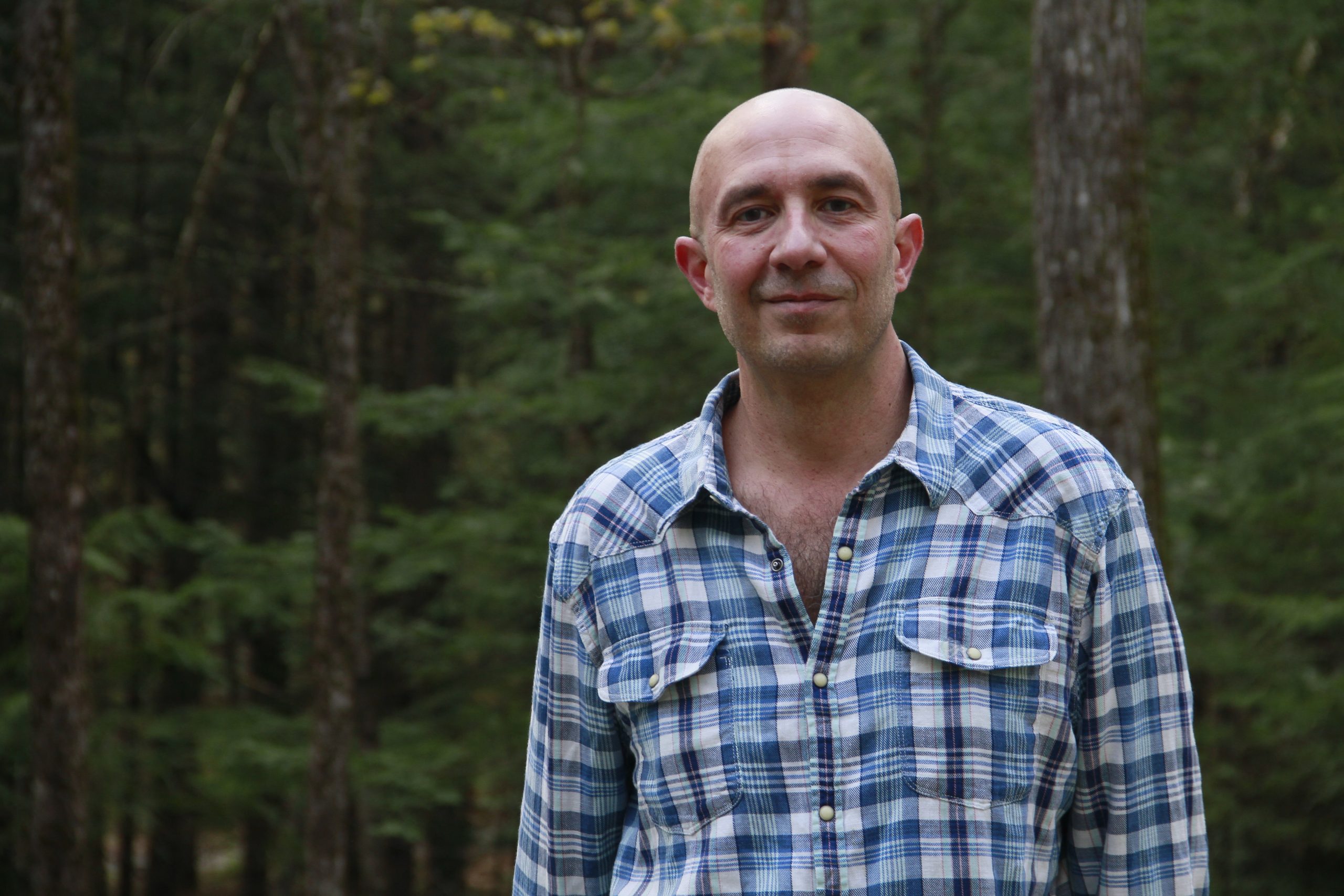
I grew up a Gen X kid in Houston, shaped by a strong family rooted in both Persian and American values. My father deeply cherishes America as the land of opportunity and, above all, freedom. My mother is a strong and proud American who taught me to stand up for myself and others. From an early age, I saw what hard work and freedom really mean.
The lessons of growing up in a multicultural family taught me to listen before you judge, especially when Uncle Bob and Uncle Mahmoud were pondering life over holiday meals.
From mowing lawns, bagging groceries, and delivering papers as a kid, to door-to-door sales and waiting tables, I learned early what it means to earn your own way. At Strake Jesuit High School I learned the meaning of service and being a man for others. I graduated from Baylor University and joined The Hartford Insurance Group, but the traditional path of set hours and set paychecks left me restless for something more, even before I could say what that was.
"Then I met a girl, Victoria, the love of my life for the last 20+ years, who showed me there was another way."
We moved to Los Angeles, where I first worked as a loan officer just ahead of the Great Financial Crisis, witnessing systemic greed in a predatory lending environment firsthand. I then moved into producing and talent management.
In Hollywood I saw the raw survival mentality it takes to chase a nearly impossible dream. I watched talented people fight daily against long odds, rejection, and uncertainty. As their advocate, I fought to open doors, secure opportunities, and help them keep going when most would have quit. Those years hardened my belief that real opportunity should never be reserved for the connected few.
Since then I have worked as an independent entrepreneur and consultant. I created RoadHouse, a virtual trading room where people from every political background, religion, and walk of life came together with one common goal: helping each other achieve financial freedom. Through honest, unfiltered conversation, we proved that common ground emerges naturally when people focus on a shared mission.
"Every input cost matters to a working family or small business. Reckless government spending, Federal Reserve policies that pillage the middle class, and corporate priorities that eliminate mom and pop businesses have quietly stacked the deck against the people doing the hardest work."
Eventually I wanted a different life, one built around real freedom, clean water, strong community, and genuine self-reliance. That search brought me to Walpole, New Hampshire. What I didn't expect was to discover that my own Scottish ancestors had settled in Epsom, New Hampshire in the 1700s.
Soon after arriving, I joined the GRCC board to help revive a long-stalled food co-op. Drawing on what I'd learned about margins and input costs, we redesigned the model into a broader food production ecosystem, secured a grant, and launched a bulk-buy program to help local farmers and homesteaders lower their costs.
What should have been a six-month fix turned into a multi-year bureaucratic delay, and I eventually resigned, but not before leaving the board with a clear, actionable roadmap so the work could continue. Vermont picked up that food ecosystem model and ran with it. The support it needed never came from New Hampshire.
New Hampshire's "Live Free or Die" spirit runs in my blood and matches the life I've always chased. I've lived the immigrant journey, the value of service, the survival grind of chasing big dreams, and the frustration of watching red tape strangle practical solutions.
I'm not a career politician. I'm someone who understands how hard people are working just to keep up, and how much harder it's getting. I'm running to lower costs, restore real affordability, cut back a government that has grown too large and too slow, and protect the economic freedom that allows Granite Staters, especially our farmers, small businesses, and families, to keep more of what they earn.
Because if hard work is no longer enough to get ahead in this country, the system is working against the people it was supposed to serve.
Have a story like mine, or something you want me to hear? Email me directly at robbie@livefreenh02.com. I read every message.
Both parties have had their chance — and both have failed the families of NH-02. This is not a left or right platform. It is a western New Hampshire platform, built from the ground up on the real challenges facing real people here.
"Live Free or Die" — as policy, not just a motto.
As seen in the Concord Monitor Why the bills keep coming due
Families in Walpole, Keene, Claremont — and across western New Hampshire — aren't imagining it. They're getting squeezed harder every single year.
Housing, groceries, energy, child care, elder care, healthcare — all up. And not because of some mysterious "market forces." This is the result of policy decisions out of Washington that have tilted the playing field toward Wall Street and large corporations: years of easy-money policy inflating asset prices, a national debt now approaching $39 trillion, tariffs that quietly tax everyday goods, and global instability driving up energy costs.
A typical family of four earning median income now ends the year nearly $1,900 in the red just covering the basics. That's not sustainable — and it's not acceptable.
National debt as share of GDP
Gross debt approaching $39 trillion — exceeding the size of the entire U.S. economy. In 2001 it was 55% of GDP, the last year the federal government ran a surplus.
Inflation — highest since April 2023
May 2026 CPI, up from 3.8% in April and 3.3% in March. Driven by a 23.5% jump in energy costs from the Iran conflict. Families already $1,900 in the red are being squeezed again.
Young families across western New Hampshire are being forced into a decision they shouldn't have to make — stay and struggle, or leave the communities they grew up in.
Median home prices hit a record $579,900 in May 2026. A household needs $158,000+ to afford one responsibly — while median income sits at $96–100K. Young families are being forced to leave the towns they grew up in. That breaks communities.
Median NH home — record high
Set May 2026, up from $569,000 in June 2025. NHAR.
Monthly mortgage on that home
5% down, current avg. rate, avg. NH property tax. Before insurance or fees.
NH residents who can comfortably afford the median home
NH Housing analysis. Need $158K+ income. Only 15% of NH households earn that.
2026 price-to-income ratio
1998 ratio: 2.8× income · Home price 2019: ~$300K · Home price 2026: $579.9K (+93%)
In 1998 a NH family needed 2.8 times their income to buy a median home. Today they need roughly 5.9 times their income — and only 15% of NH households earn enough to qualify. Rents are up 35% in five years. The gap between what families earn and what homes cost has never been wider.
Sources: NHAR (May 2026) · NH Business Review, May 2026 · NHFPI "Affordability Eroded" Oct. 2025 · NH Housing analysis / NH Bulletin Sept. 2025 · NHAR Affordability Index 2025 · NHFPI Feb. 2026. "1998 ratio," "affordability index in 2013," and "past-decade" comparisons are carried from the original source and have not been independently re-verified against the updated 2026 price.
Western New Hampshire was built on small businesses and family farms. New Hampshire has nearly 4,000 farms — 87% report less than $50,000 in gross annual sales. Processing bottlenecks, 6–12 month slaughter wait times, and 25–27¢/kWh electricity rates are forcing small operations out. Food is life. How we feed ourselves is a matter of resilience and national security.
NH farms with less than $50K in gross annual sales
USDA Census of Agriculture 2022 · 3,949 total NH farms
NH jobs lost 2024 to 2025
Non-farm payroll fell from 703,833 to 701,633. Manufacturing, wholesale & retail hardest hit. NHFPI, May 2026.
Real wage decline in 2025
Second consecutive year inflation-adjusted wages fell. Workers earning more but buying less. NHFPI, May 2026.
Per kWh electricity in NH
33% above the national average of 18.83¢/kWh. Among highest in the nation. EnergySage / EIA, July 2026.
In 2022 there were 3.5 jobs for every unemployed person in NH. By end of 2025 that collapsed to roughly 1:1 — the lowest in a decade. Real wages have fallen two years in a row. Manufacturing, wholesale, and retail — the backbone of western NH's economy — are all shrinking. And this is before the full impact of tariffs hit NH's $10.2 billion import economy.
Sources: NHFPI "Headwinds Hit the NH Economy" Aug. 2025 · NHFPI "NH's Labor Market Slowed in 2025" and "NH Employment Growth Stalled in 2025," May 2026 · NH Employment Security Local Area Unemployment Statistics · EnergySage / EIA, July 2026 · USDA Census of Agriculture 2022 (87% farm figure)
Rural hospitals and access to care in western New Hampshire are under severe strain. At least four New Hampshire rural hospitals are at risk of closure. Operating costs rose 44% from 2019–2024. NH's approved 2026 marketplace rate increase is 17.3%, and if enhanced federal tax credits expire, out-of-pocket premiums for subsidized enrollees could rise as much as 75% on average nationally on top of that.
Rise in NH hospital operating costs 2019–2024
Labor costs up 36.1%. NH hospitals at 90% capacity vs. 75% national avg. NHHA 2025.
NH adults who delayed or skipped care due to cost
Survey of 1,300+ NH adults, 2024. NH Bulletin / Altarum Institute.
NH residents at risk of losing Medicaid coverage
Under proposed federal cuts. NH would lose $1.3B under one plan. KFF / AFT analysis.
NH 2026 rate increase
Premium spike w/o credits (national avg.): +75% avg
13 of NH's 26 acute care hospitals serve rural communities and survive largely on Medicaid. 7 have negative operating margins — 2 at immediate risk of closure within 2–3 years. NH hospitals are running at 90% capacity vs. the 75% national average. Since 2000, 9 NH hospitals have dropped labor and delivery services, doubling travel time for women in rural NH areas.
Sources: NH Hospital Association 2025 · NH Bulletin / Altarum survey 2024 · Center for Healthcare Quality & Payment Reform Dec. 2025 · KFF Medicaid analysis · AFT/Georgetown CCF NH fact sheet · UNH Franklin Pierce Healthcare Vitals Oct. 2025 · Boston Globe Dec. 2025. The 17.3% figure is NH's approved 2026 marketplace rate increase; the 75% figure is a separate national estimate of out-of-pocket cost impact if enhanced tax credits expire — the two measure different things and are not additive.
The federal government has encroached far too deeply into areas that rightfully belong to the states and the people. Free speech faces growing threats from government pressure on tech and AI platforms. The First and Second Amendments are inseparable guardians of liberty.
New Hampshire has been a constitutional carry state since 2017, and it should stay that way. The line is already clear: if you're convicted of a violent felony, you lose your right to carry. Period.
We cannot keep pouring American lives, taxpayer dollars, and national attention into endless foreign conflicts while families in western New Hampshire are told there is no money for healthcare, child care, or rural hospitals.
Pentagon's own figure for Operation Epic Fury, testified April 29, 2026. Mostly munitions. CNN sources put true cost at $40–50B including base repairs.
Gas prices up more than 40% since the war began Feb. 28. National average hit $4.39/gal. Before the war: under $3. The Strait of Hormuz carries 20% of global oil.
CPI hit its highest level since April 2023 in May 2026, driven largely by a 23.5% jump in energy costs from the Iran conflict.
Estimated combined hit per NH-02 household before food prices rise
Sources: Pentagon Acting Comptroller Jules Hurst III, House Armed Services Committee April 29, 2026 · CNN April 29, 2026 · AAA national gas price data · BLS CPI-U June 10, 2026 · Independent Grocers Alliance · IRS Statistics of Income (~150M tax filers) · Penn Wharton Budget Model · CSIS.
This is a fast-moving conflict: as of July 2026 a ceasefire has broken down, gas prices are rising again, and Pentagon officials have since cited cumulative costs closer to $29–30B with a much larger supplemental funding request pending in Congress. This section should be refreshed on a regular cadence.
Western New Hampshire was built on self-reliance, fed by its own farms, its own land, its own people. Somewhere along the way, we lost that identity. Today, New Hampshire produces only 3% of the food its residents eat. The other 97% travels hundreds, sometimes thousands, of miles through supply chains we do not control.

We are facing the consequences of looking out instead of in. For the families of NH-02, that means higher prices, limited access in rural areas, and farms that struggle to find markets for what they grow. The federal government's own 2022 National Security Memorandum on Food and Agriculture (NSM-16) designates the domestic food system as critical infrastructure, alongside energy and transportation. The vulnerability is documented. The case for action is clear.
Robbie's take on this, in his own words: see the post on X
of food consumed in NH is produced in-state
food insecurity rate in Grafton County
in federal investment currently flowing into NH-02
A regional food ecosystem built for all of NH-02, starting with a first site in the Grafton County / Upper Valley area, strategically located near population centers, with I-89 corridor access to Lebanon, Hanover, Concord, and beyond. Rather than layering more temporary assistance programs on top of a fragile system, a small, strategic portion of the $1.85 billion in federal investment already flowing into NH-02 would be redirected toward permanent infrastructure that builds lasting self-reliance.
This is infrastructure, the kind that puts local farms, local processors, and local families back in control of what ends up on their tables. The model is designed to expand, Cheshire, Sullivan, and Coös Counties included, as it proves out.
Every district-wide effort needs a first site, and Grafton County combines high need with strong strategic positioning. Food insecurity rates run 11–12% overall, with higher rates among children in parts of the county. Grocery and SNAP access in western and rural areas is among the sparsest in the state.
At the same time, the Connecticut River valley holds significant existing farmland, orchards, dairy, and maple operations, a foundation that is already here. Institutional buyers including Dartmouth-Hitchcock Medical Center create reliable, local demand. The I-89 corridor provides efficient distribution without requiring new transportation infrastructure. Grafton fills a clear gap in the Upper Valley that existing regional efforts have not reached, and gives the model a proving ground before it expands to the rest of the district.
Advanced indoor farming systems capable of producing food 365 days a year, reducing losses from farms unable to reach processors or markets before crops spoil.
Multi-commodity processing for meat, dairy, and produce under one roof, including dairy pasteurization and value-added lines, built to operate under USDA inspection so products can move freely across state lines.
On-site organic fertilizer production, solar, geothermal, rainwater recapture, and waste-to-energy systems designed to reduce operating costs and long-term dependence on outside inputs.
Hands-on training in nutrition, regenerative farming, and food entrepreneurship, building the people and skills this region needs to sustain the system over time.
Where I stand on HB 396: I support it. The bill lets small New Hampshire farms sell limited quantities of meat directly to their neighbors, up to three cattle, five swine, or ten sheep or goats a month, without mandatory USDA inspection. A farmer processing a few animals a month for people in their own town should not need a federal permission slip to do it. Governor Ayotte vetoed the bill in August 2026, and I support the effort to override that veto and push for full transparency.
Total phased investment: $45–$90 million, a small fraction of the $1.85 billion in federal awards already flowing into NH-02. No new appropriations required to begin.
Funding would be layered across USDA Resilient Food Systems Infrastructure (RFSI), USDA Meat and Poultry Processing Expansion Program (MPPEP), Northern Border Regional Commission (NBRC) awards, Value-Added Producer Grants, Rural Development loans, state matching funds, private investment, and farmer and co-op equity.
As NH-02's representative, I would fight to direct existing resources toward high-return investments that build real, lasting resilience for this region.
Sources: USDA Economic Research Service; NH DHHS Food Security Data 2023; National Security Memorandum NSM-16, Strengthening the Security and Resilience of United States Food and Agriculture (2022); Northern Border Regional Commission economic multiplier data.
Do you remember the first time you saw it?
"Live Free or Die."
For a lot of us, that meant something. It felt like protection — like there were lines that couldn't be crossed because the people here wouldn't allow it. Like those words actually had weight.
That feeling has been slipping.
You can see it in housing. $525K to get in, $158K to carry it, and most families aren't even close. Kids are leaving the towns they grew up in. Seniors are sitting at kitchen tables doing the math on whether they can stay. That's not a theory — that's happening.
You can see it in healthcare. Cheshire. Littleton. Concord-Laconia. Cottage. Hanging on. Everyone here understands how thin that margin is when something goes wrong.
You can see it in the cost of living. Groceries that hit every week. Energy at 25 to 27 cents per kilowatt hour. Diesel. Propane. Farmers trying to build something local getting buried under rules they didn't write and can't work around.
You can see it in the numbers most people don't follow day to day. $39 trillion in debt. Interest pushing toward a trillion a year. That pressure doesn't stay in Washington — it shows up in real life, one way or another.
And now it's moving into the next phase.
AI systems. Data collection. Data centers pulling from local power, water, and land. Minimal jobs on the back end. Permanent demand on resources. More tracking. More distance between people and control.
You can feel it building. Not all at once — just steady.
And it all lands right back on those words.
"Live Free or Die." John Stark wrote them in 1809 — and he didn't stop there: "Death is not the worst of evils." There are lines in that statement, and they weren't meant to be decorative.
The New Hampshire Constitution makes that even clearer. Article 10 puts responsibility on the people when government drifts away from them. Not later. Not when it's convenient.
So here we are.
Same outcome, cycle after cycle, no matter who's in charge. Costs keep rising. Control keeps moving further away. Decisions feel more distant from the people who actually live with them.
And the question is sitting right in front of us:
Are we living free — or dying slow?
Because this keeps going unless something interrupts it. No one is coming to fix it.
This state has always drawn its own lines. It held out at the founding. It demanded a Bill of Rights. That mindset didn't disappear. People still come here because of it — movements like the Free State Project exist for a reason.
At some point, it comes back to us.
Reassert what this place stands for.
Hold the line on accountability.
Force government back into its lane.
That's the work.
And it's on us.
Op-eds, letters, podcasts, and video from Robbie Mahrou — in his own words and in the press.
Robbie makes his case for Congress in a wide-ranging interview: affordability, defending the Constitution, and the fight to keep rural healthcare alive in western NH.
Watch on YouTube →Robbie sits down with a western NH farmer to talk food independence, the farm bill, and what it actually takes to keep a small operation alive in 2026.
Watch on YouTube →For 30 years New Hampshire has patched problems instead of building real solutions. On energy, food, and lumber, the pattern is the same, and it all lands on the same property tax bill.
The 2026 Farm Bill handed $54B in new subsidies to large commodity operations and left local food programs with zero mandatory funding. Western NH farms are doing the math at midnight.
Data centers consume power like a small city, employ as few as 25 permanent workers, and want your town to absorb the water and grid costs. Western NH deserves the full picture.
In the Live Free or Die state, people are afraid to sign a ballot petition. Washington warned us about this in 1796. Someone has to say it out loud, clearly, and without permission.
Western New Hampshire needs a voice that answers to its people, not party leadership or outside donors. Get involved, spread the word, or chip in to keep this campaign independent.
Robbie is on the November ballot because more than 1,600 NH-02 voters put him there. Now it's on all of us to finish the job, chip in, or get involved.
More than 1,600 NH-02 voters put him there. Running independent means no party machine and no national committee picking up the difference. Every dollar and every volunteer hour makes this campaign move.
No crowd too small. No topic off limits. No script. Just an honest conversation about what matters to the people of western New Hampshire.

This campaign doesn't run from the top down. It runs from the ground up — from kitchen tables, granges, church halls, front porches, and wherever people in NH-02 are willing to gather and talk.
I'm not coming to tell you what I think you need to hear. I'm coming to listen — to find out what's keeping you up at night, what your community is missing, what you think Washington keeps getting wrong, and what you think a real representative should actually do about it.
I am nothing more than an advocate for the will of the people in this district. The platform should be defined by you — not by me, not by a party, and not by donors.
If you have a group — no matter how big or small — and you want to have a real conversation, reach out. We'll make it work. A living room of five neighbors is just as important as a town hall of five hundred.
A few neighbors, an honest conversation about what matters in their town.
Granges, VFW posts, Rotary clubs, church groups, business associations — if your group cares about NH-02, Robbie wants to be there.
Larger gatherings where the whole community can show up, ask hard questions, and push back.
Robbie is on the November ballot. More than 1,600 NH-02 voters signed to put him there. Now the real work starts, and it's on all of us to finish the job.
Signatures secured
Ballot access confirmed
On the ballot
Running independent means no party machine and no national committee picking up the difference. This campaign moves on people showing up, chipping in, and bringing what they know. Here's how you can be part of it.
Every dollar goes directly to reaching voters across NH-02 between now and November.
Boots on the ground make campaigns move. We need people in every town across NH-02.
Skills move this campaign as much as money does. Tell us what you do and where you can help.
Email Robbie directly and tell him what you'd like to do, he reads every message.
Can't collect in person? Share this page.
Ballot access requirements per NH RSA 655:25 and the NH Secretary of State's Office. Filing deadline: September 2, 2026 at 5:00 p.m. Signatures must be from registered voters within NH-02, dated in 2026, and grouped by municipality. For questions contact the NH Secretary of State's Elections Division at 603-271-3242 or elections@sos.nh.gov. Paid for by Robbie Mahrou for NH-02.
This campaign runs on real conversations with real neighbors. Reach out — Robbie reads every message.
Best way to reach the campaign directly
Leave a message — we'll call back
News, platform, events, and more
"Live Free or Die" — as policy, not just a motto. Western New Hampshire deserves a voice that answers to its people, not party leadership or outside donors.
Robbie is on the November ballot.
More than 1,600 NH-02 voters signed to put him there. Running independent means no party machine and no national committee picking up the difference from here to November.
Every dollar and every volunteer hour makes this campaign move.